
Spot repair
One cracked or offset section is cut out and replaced with new pipe and proper couplings through a single small excavation.
Targeted repairs for damaged lines
Same backup every few weeks? We repair the damaged section so it stops coming back, without replacing the whole line.
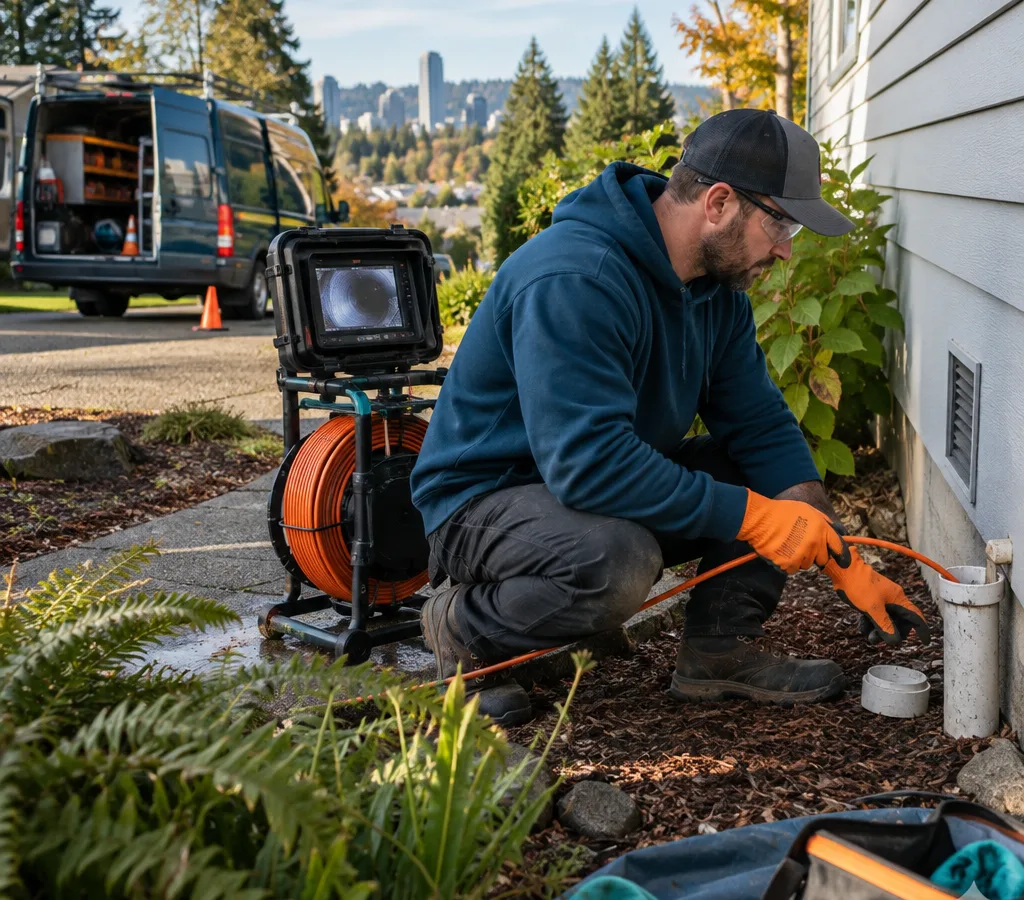
When cleaning stops working
A clog that returns weeks after the line was cleared usually means something structural: a cracked pipe, a joint that has pulled apart, a sag that holds waste, or roots growing through an opening. Other signs are gurgling toilets, sewage smells near floor drains, and a wet or sunken strip of lawn over the line.
Cleaning restores flow for a while, but it can't close a crack. Fixing the damaged section is what stops the cycle. Not every backup is a broken line, though; our sewer repair Portland Oregon page covers the other causes and how we sort them out.
Find it, then fix it
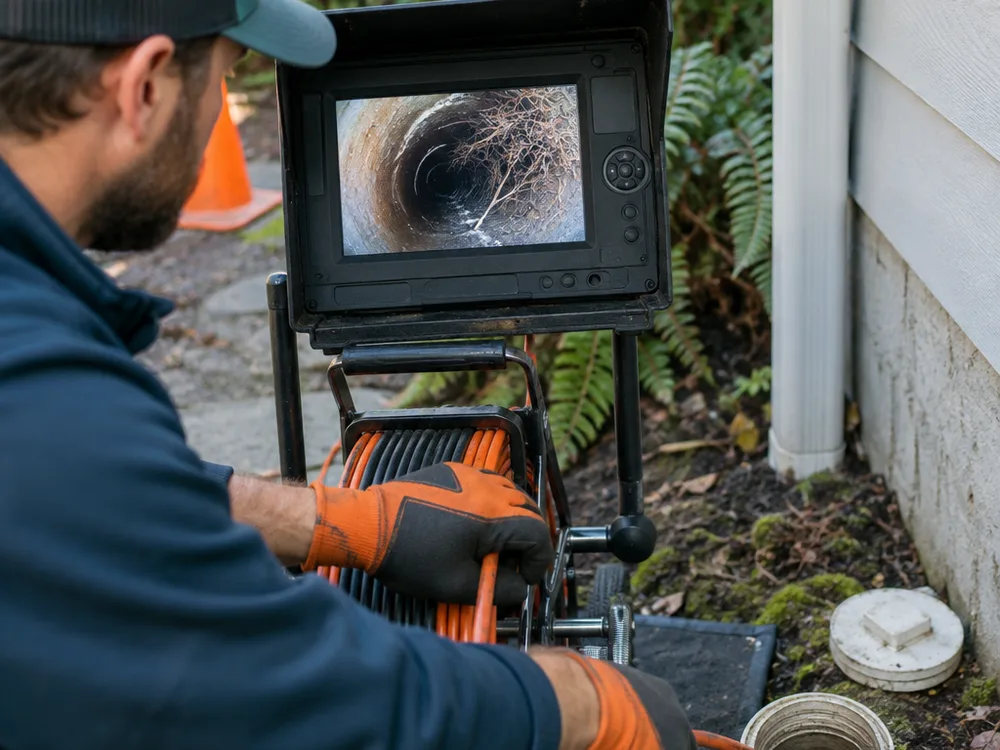
We run a camera through the line from a cleanout, note the distance to each defect, and use a locator to mark the spot and its depth on the surface. That's what keeps the dig small.
The city's rules put the stretch of lateral from the curb to the house on the property owner, so that's the section we repair. Problems between the curb and the main are the city's to fix, and knowing which side a break is on decides who pays for it.
Most of what we fix is straightforward sewer line repair. Portland's older lines are often clay or cast iron, and mature street trees send roots into the joints; those two things are behind many of the failures we find.
Repair types
One cracked or offset section is cut out and replaced with new pipe and proper couplings through a single small excavation.
We clear the roots, then repair the joint or crack they came through, because cutting roots alone only buys a season.
A low spot that holds waste is re-bedded at the correct grade so solids stop settling there.
If the line is broken in several places, fixing it piece by piece costs more over time, so a full replacement or a liner is often the better spend.
Cost
Most spot repairs cost about $1,500 to $5,000. When the line needs replacing, the usual range is $60 to $250 per foot.
Depth, what sits over the pipe (lawn, driveway or slab), and how far the break is from a cleanout all change the price. Most sewer line work here also needs a plumbing permit from Portland Permitting & Development. You get the exact number before any digging starts.
Drains slowing down again? Get the break found before it collapses.
Call (503) 221-5373Where the backups show up tells us whether it's a branch line or the main.
We measure the distance to the defect and mark it on the surface.
You get the repair method, what will be opened and restored, and the price in writing.
We open a single access point where possible and replace or re-bed the damaged section.
We check that the line drains, then backfill and restore the surface.
What people ask
Yes. We locate the break precisely so only a small section of concrete comes out, or we check whether lining can avoid cutting it at all.
It depends on the depth, the surface over the pipe and when the inspection can be scheduled. You'll get a timeline before work starts.
Cleaning removes the blockage but not the cause. A crack, offset joint or sag will catch debris again until that section is repaired.
Repair fixes one damaged section. Replacement swaps out the whole run to the street, which makes sense when the pipe has failed in several spots.
Repairing the joint or crack the roots came through removes their way in. Cutting roots without fixing the opening only lasts until they grow back.
Fix it once
Call and tell us how often it's backing up. We'll find the damaged section and tell you what it costs to fix for good.
Where we work