Cured-in-place lining
A resin-soaked liner is pulled or inverted into the old pipe and cured in place, forming a new pipe inside the old one that seals cracks and root entry points.
Less digging, same result
Sewer line under the driveway or a big tree? Fix it from small access points and keep your yard and concrete intact.
How it works
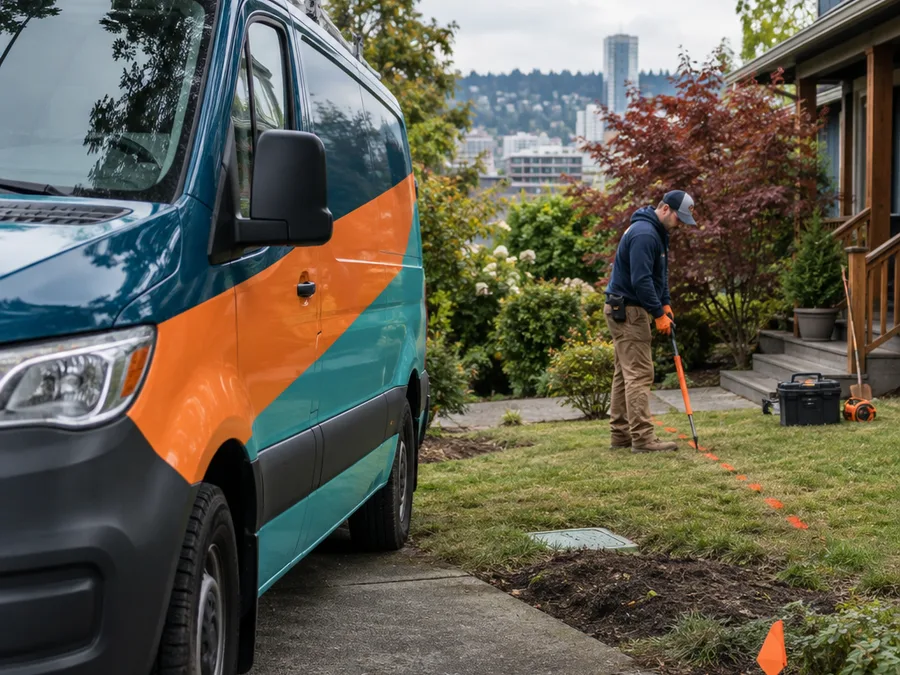
Trenchless methods repair or replace a sewer line from one or two small openings instead of a trench along the whole route. That matters when the line runs under a driveway, patio, mature tree or finished landscaping that would cost a lot to rebuild.
Not every line qualifies. A collapsed pipe or a long sag usually needs digging, so we check the line first and tell you plainly if trenchless will work. If it won't, we'll cover your other options for sewer repair in Portland.
Before the liner goes in
A liner only bonds to clean pipe, so roots, grease and scale are cleared out with high-pressure water before anything goes in.
We also measure the run, check every joint and locate branch connections that have to be reopened after lining.
Two methods
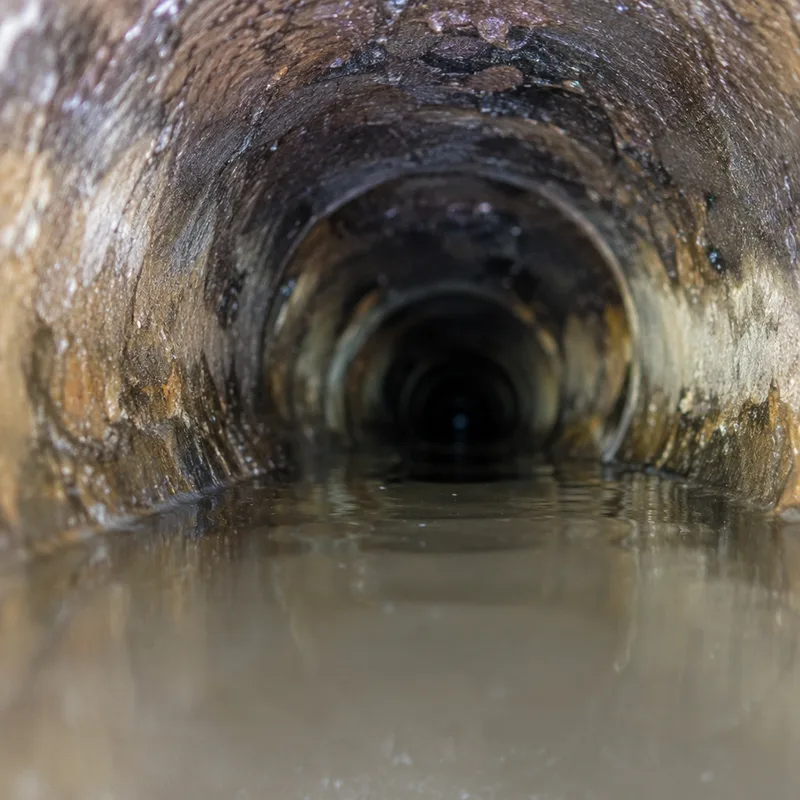
A resin-soaked liner is pulled or inverted into the old pipe and cured in place, forming a new pipe inside the old one that seals cracks and root entry points.
A bursting head pulls new pipe through the old line and breaks the old pipe outward as it goes. It suits badly worn pipe that still follows a straight path.
Lining keeps the pipe's existing path; bursting can step up the pipe size. The line's condition decides.
Cost
Trenchless replacement and lining usually cost $60 to $250 per foot, about the same per foot as an open trench.
The savings come afterward: no new driveway, patio or landscaping to pay for. You get the exact price before work starts.
Line runs under your driveway? Ask about fixing it without digging.
Call (503) 221-5373We confirm the pipe can be lined or burst and measure the run.
The pipe is cleared so the liner can bond or the bursting head can pass.
The liner is set and cured, or new pipe is pulled through between the two access pits.
Any branch lines covered by the liner are cut back open from inside the pipe.
We confirm the line is flowing, fill the pits and tidy the site.
Is it right for you?
No. Collapsed sections, severe sags and some badly offset joints have to be dug and repaired first.
Cured-in-place liners are designed for a long service life and resist the root intrusion that ruins old joints.
Not while the liner cures or the new pipe is being connected. The line is back in service as soon as it's reconnected.
Per foot it's about the same as digging. It usually works out cheaper when there's a driveway, patio or mature landscaping over the line.
Keep the yard
Call and tell us what sits over your sewer line: a driveway, patio or big tree. You'll find out if a no-dig fix will work and what it costs.
Where we work